

The Drying Beds
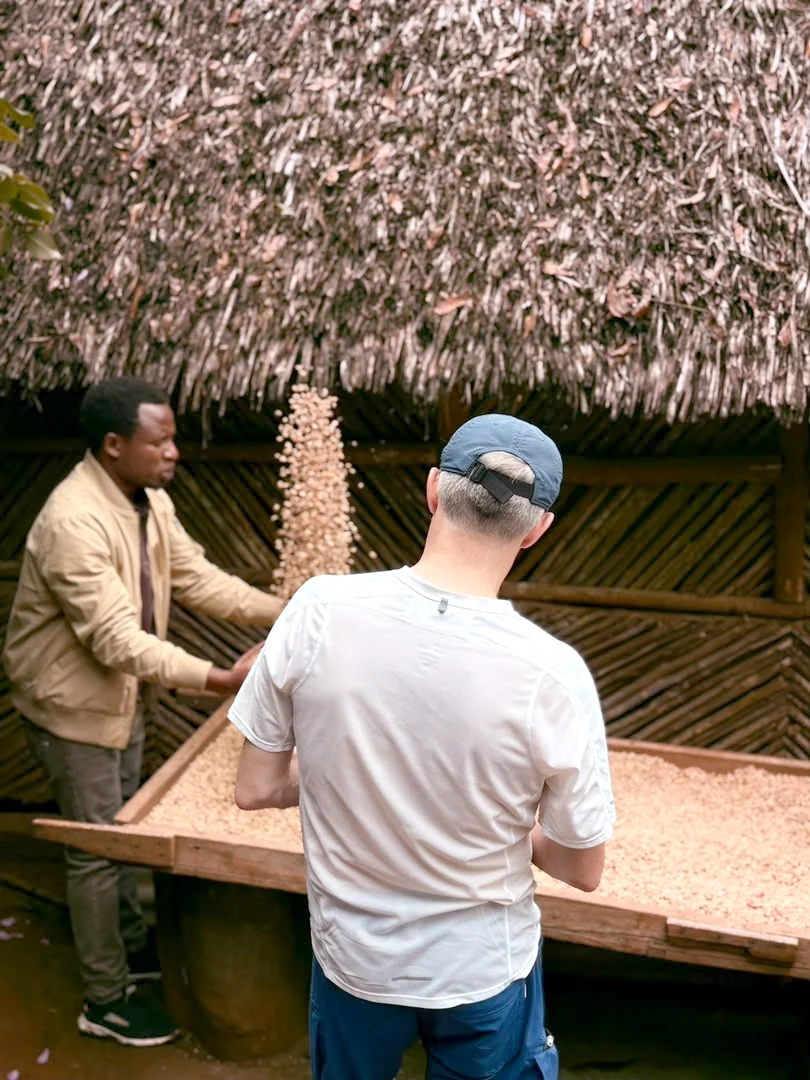
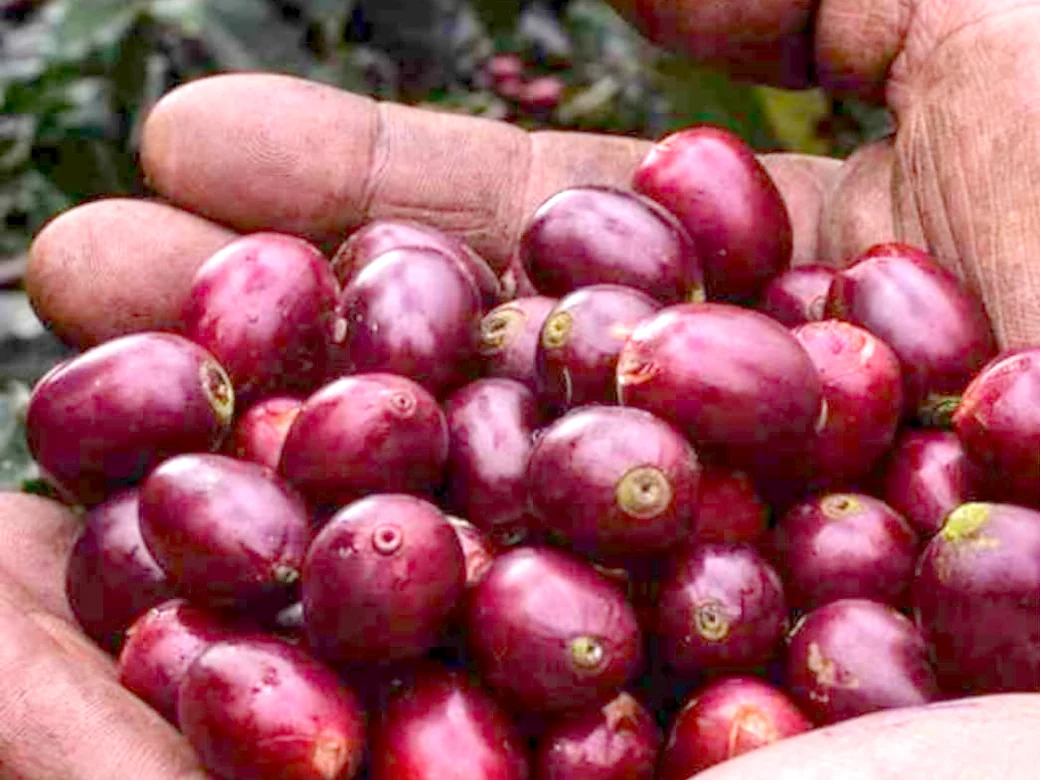
First we take off the red skin. Then the beans dry in the sun on open beds for about a week. If you hurry this part, the coffee tastes sour, so we never hurry it.
Photograph by @oncamcreations
Welcome to Materuni, where the Chagga have spent a century turning glacial water and volcanic soil into the world’s most elegant Arabica.
A kihamba is the piece of land a Chagga family lives on. The house stands on it, and the food grows around the house: tall trees for shade, banana plants under them, and coffee bushes in the cool shade below that. One small plot, everything together, handed down from parents to children. Justin was born on his.
Coffee itself reached this mountain in 1898, carried up by missionaries who planted the first trees at Kilema. For twenty years the Chagga were forbidden from growing it. The crop was for settlers; the mountain’s own people were to work it, not own it.
That changed after 1918. Given the right at last, our ancestors looked at the steep ridges of Kibo and did something quietly miraculous. Instead of clearing the land, they planted upward instead of outward. The old forest stayed standing to hold the mist. Banana trees went in beneath it to take the hard equatorial sun. And in the cool shade below those, the Coffea arabica. Three layers on one plot, which is how a kihamba the size of a garden feeds a family and still sends coffee down the mountain.
By 1925 they had organised. By 1933 they had registered the Kilimanjaro Native Co-operative Union, the first of its kind in the country. It was never only a crop. It was an act of economic defiance that put children through school, built permanent homes, and kept this village sovereign on its own hillside.
Nearly every cup ever poured comes from one of two plants. One endures anything. The other demands everything, and repays it.
Coffea canephora
Robusta earns its name on hot, flat plains, surviving drought, disease and full sun with generous yields and few demands. Its resilience is chemical: it makes roughly twice the caffeine as a natural pesticide.
You taste that armour. The cup is heavy bodied and frankly bitter, woody and grain like at the finish. It is the backbone of instant coffee and the crema in a cheap espresso, and it is not what grows here.
Coffea arabica
Arabica is difficult on purpose. It refuses heat, resents direct sun, and will not forgive poor drainage. It asks for altitude, permanent shade, cold nights, steady mist, and soil with real mineral depth beneath it.
The Kihamba gives it all five. Cold nights slow the cherry, and a slow cherry builds sugar. What arrives in the cup is liquid silk: complex acidity, stone fruit and citrus at the top, deep cocoa undertones beneath, and a clean finish that lingers rather than clings.
| Robusta | Attribute | Arabica |
|---|---|---|
| Sea level to 800m | Altitude | 900m to 2,000m |
| Roughly 2.4 percent | Caffeine | Roughly 1.2 percent |
| Bold, bitter, heavy | Character | Sweet, aromatic, complex |
| Tolerates almost anything | Temperament | Demands near perfection |
Photograph by @oncamcreations
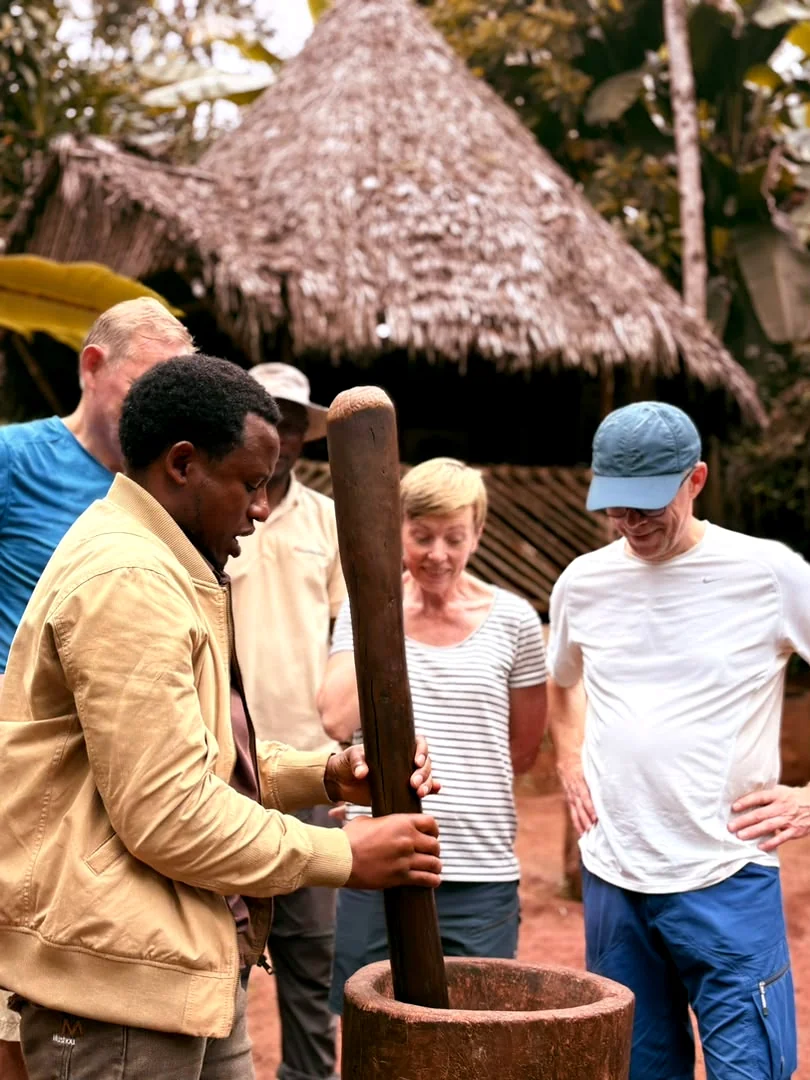
We do not process coffee in isolation. We sing it into existence. On these slopes the harvest is an open invitation for the valley to gather, and the mortars, hewn from ancient trunks, set a heavy structural tempo the whole yard keeps.
The poles rise and fall. Feet stamp the dark red volcanic earth on the offbeat. Kichagga chants climb through the banana canopy in call and response, mama singing the line and the circle answering on the strike. Children join, because there is no version of this where they are told to wait outside.
That energy roasts into the bean over the open fire. You are not buying a ticket to watch a performance. You are stepping into a living centennial ritual.
When you leave, I want you to feel like you visited a friend, not like you bought a ticket.
Justin Materuni
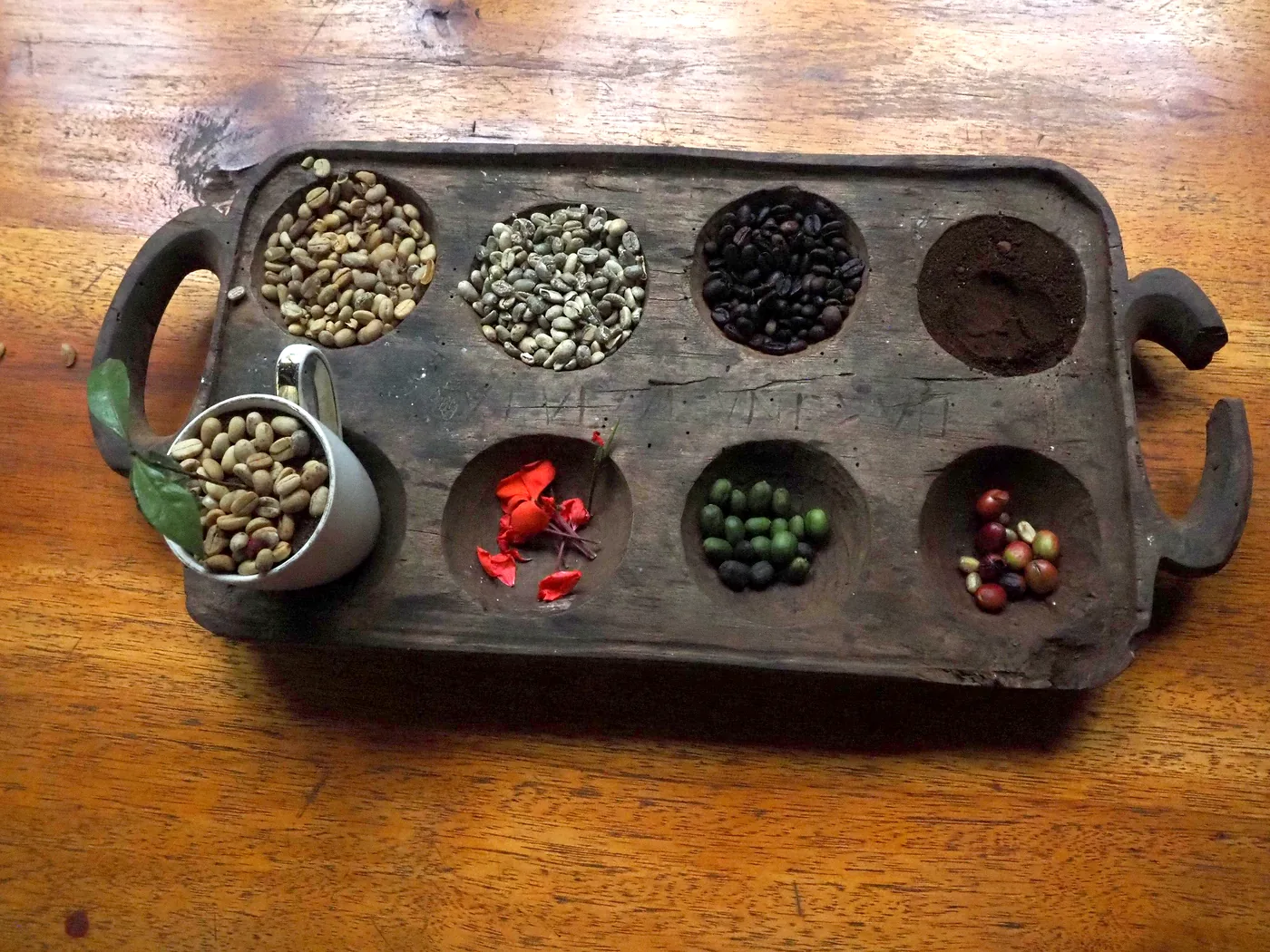
Eight steps from the tree to your cup. You do every one of them yourself. Nobody stands behind a rope here and watches.
Photograph by @oncamcreations
First we take off the red skin. Then the beans dry in the sun on open beds for about a week. If you hurry this part, the coffee tastes sour, so we never hurry it.
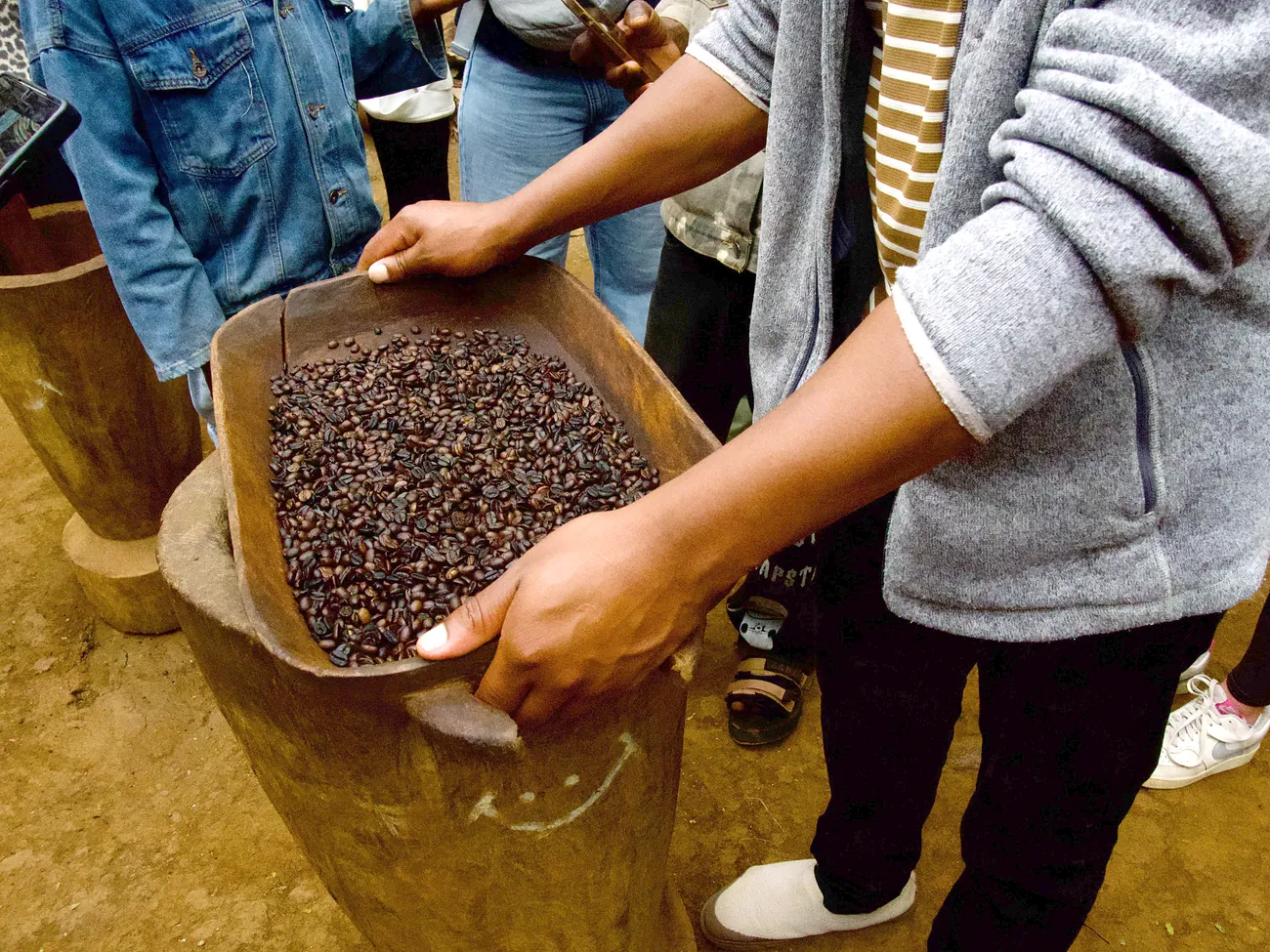
The dry beans still have a thin shell on them. We pour them into a big wooden bowl, carved from one tree trunk a very long time ago. The shell comes off here, by hand.
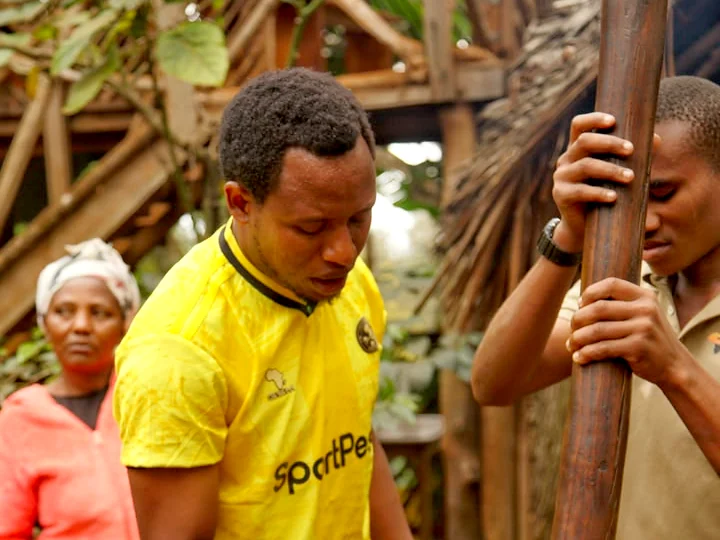
We crush the shells with tall wooden poles, and we sing while we do it. The song keeps everyone on the same beat. You will be given a pole. Everybody gets a turn.
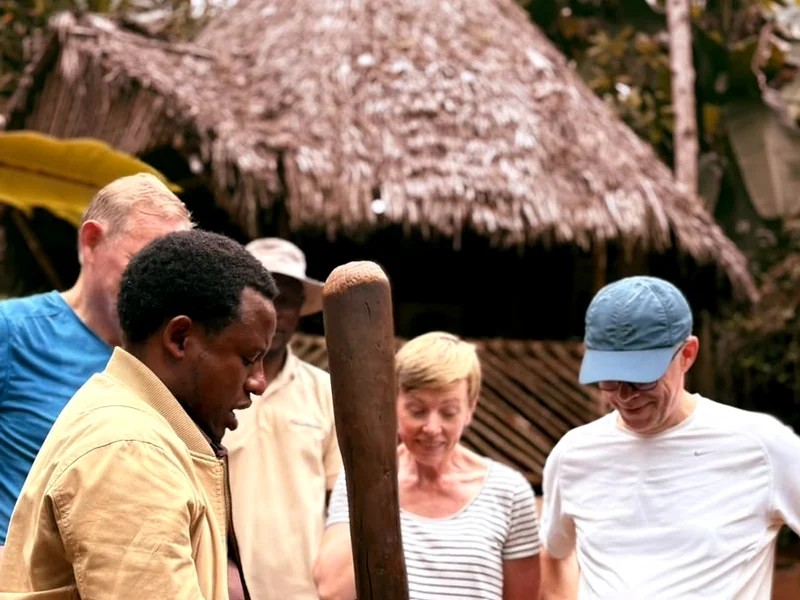
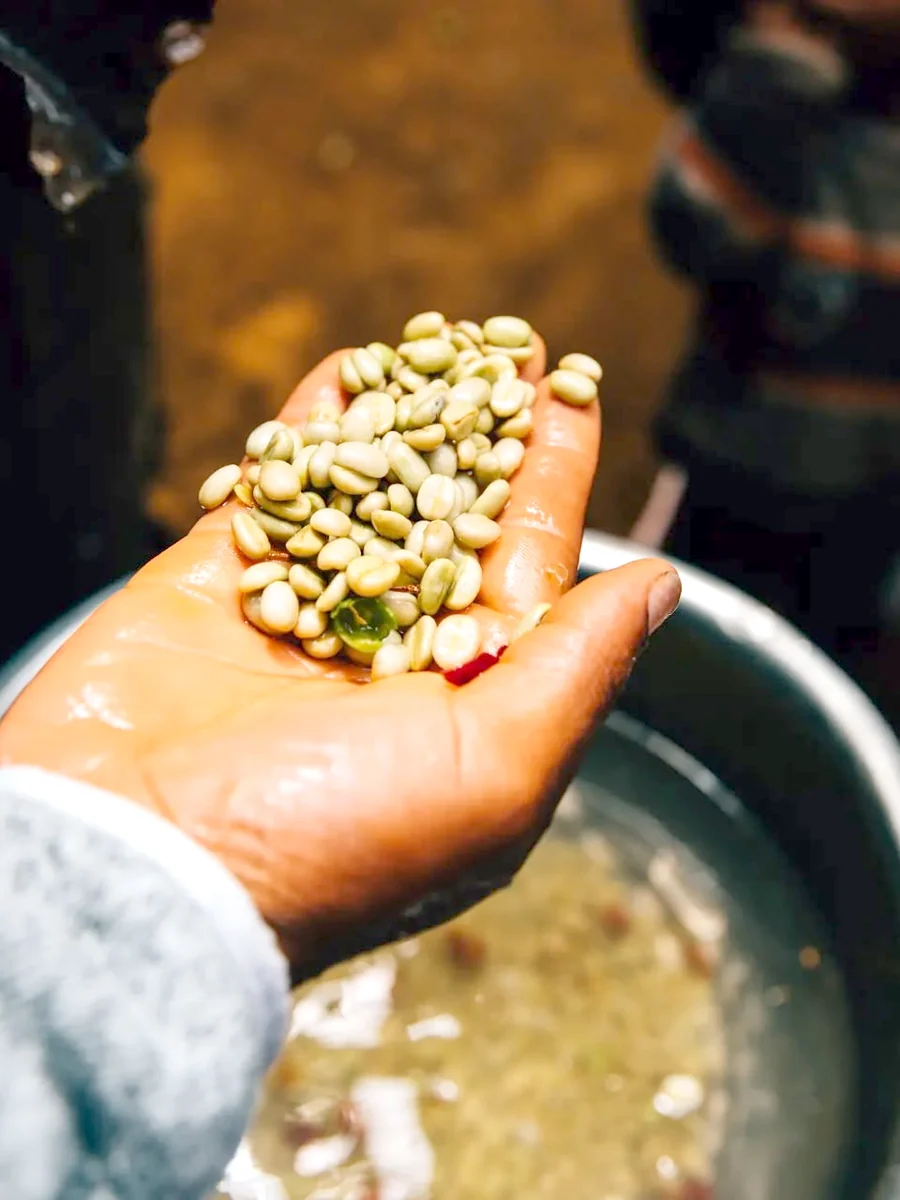
We toss the beans up from a flat basket and the wind blows the light shells away. What falls back into the basket is clean green coffee, ready for the fire.
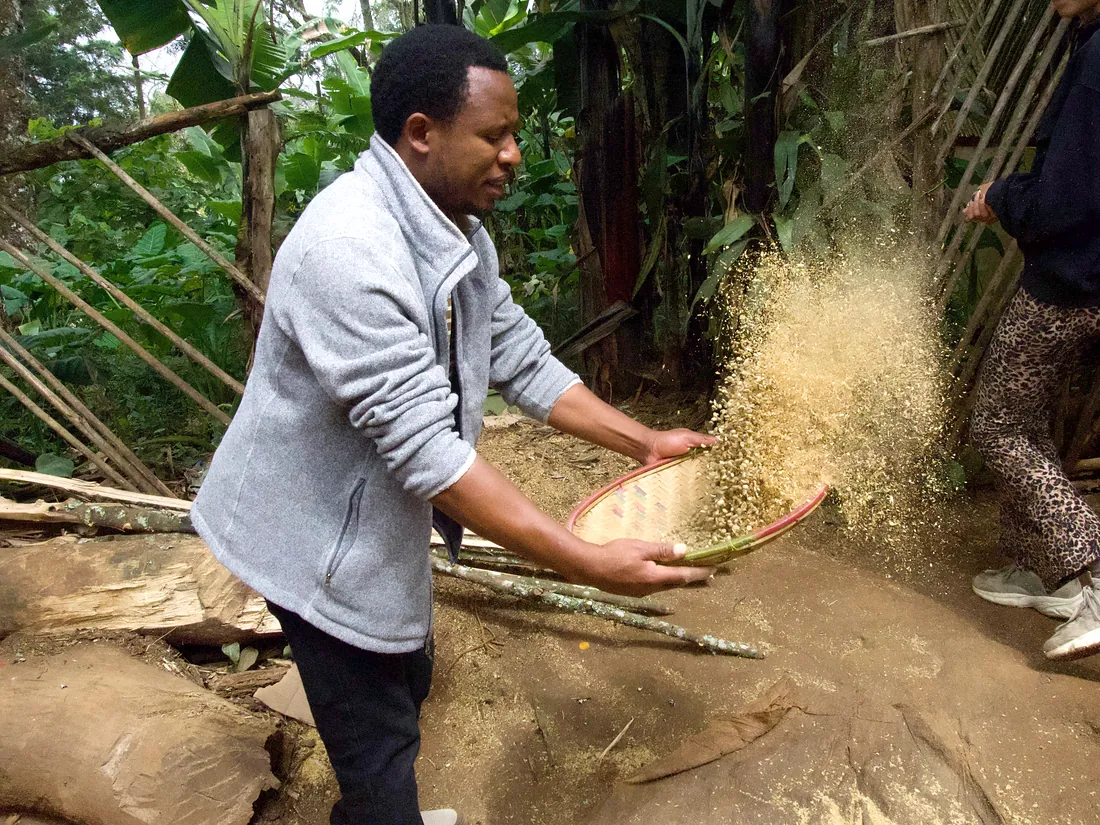
Photograph by @oncamcreations
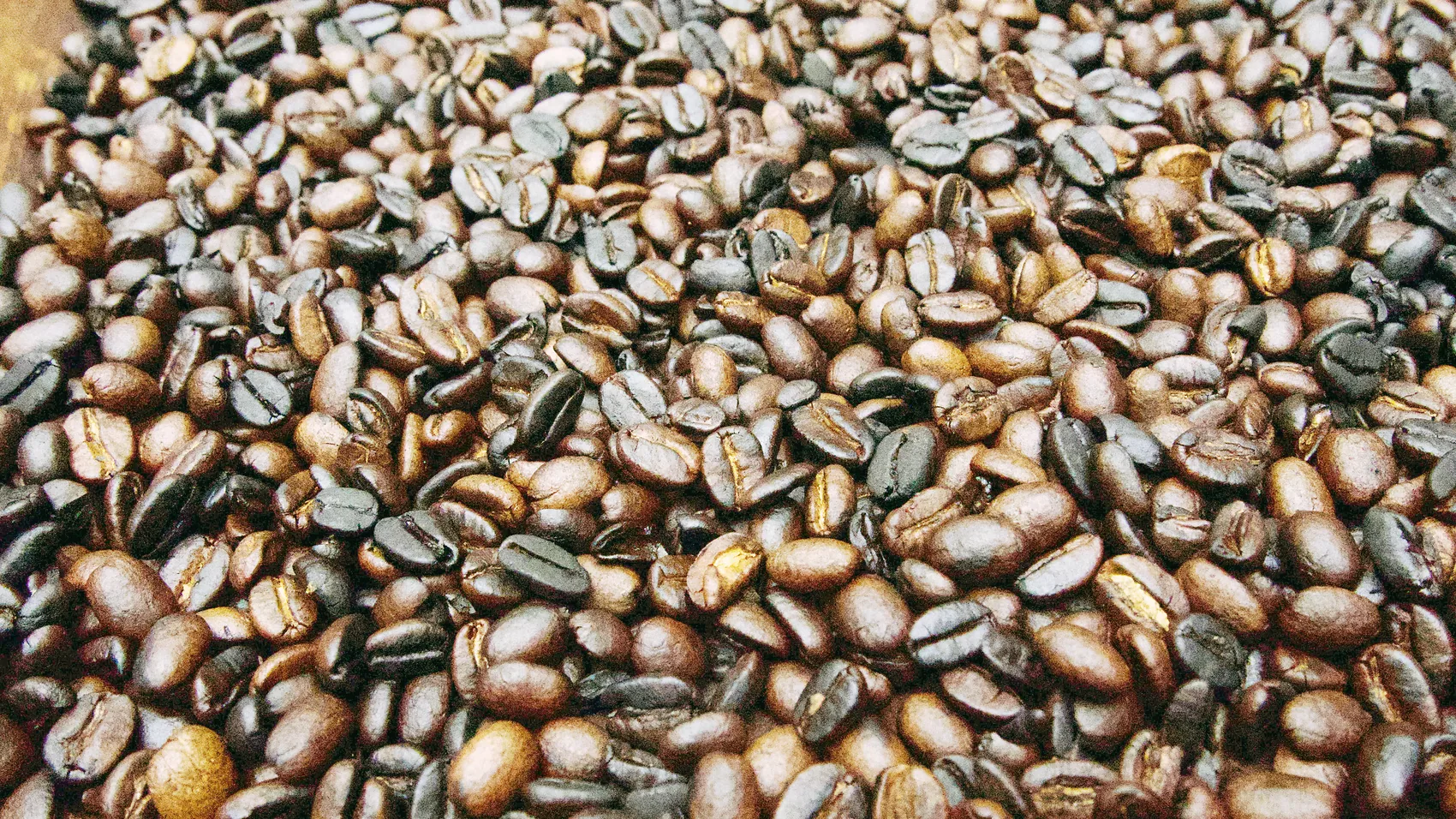
We roast the green beans on a flat pan over a wood fire. There is no timer. Justin watches the colour, smells the smoke, and listens for the beans to crack.
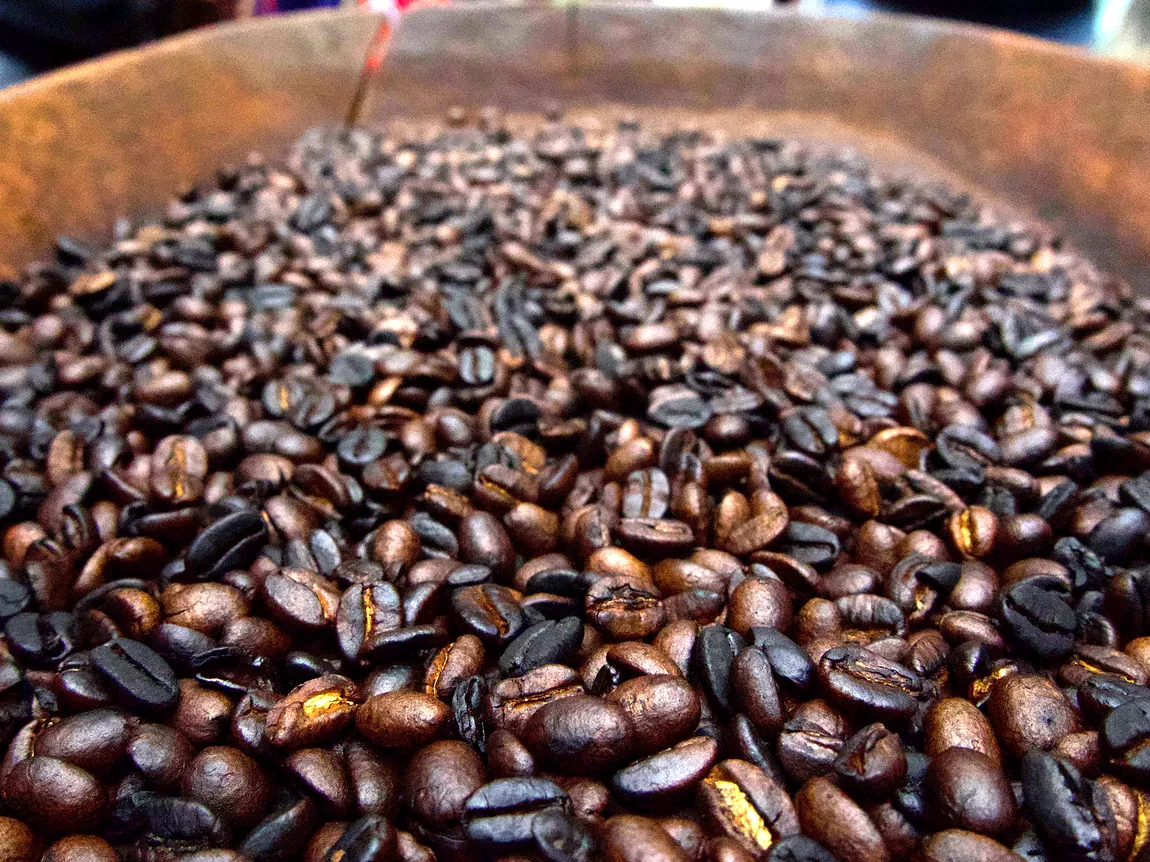
Photograph by @oncamcreations
The hot beans go into a wooden tray to cool. We turn them by hand and pick out any bean that did not roast well, so only good ones go into your cup.
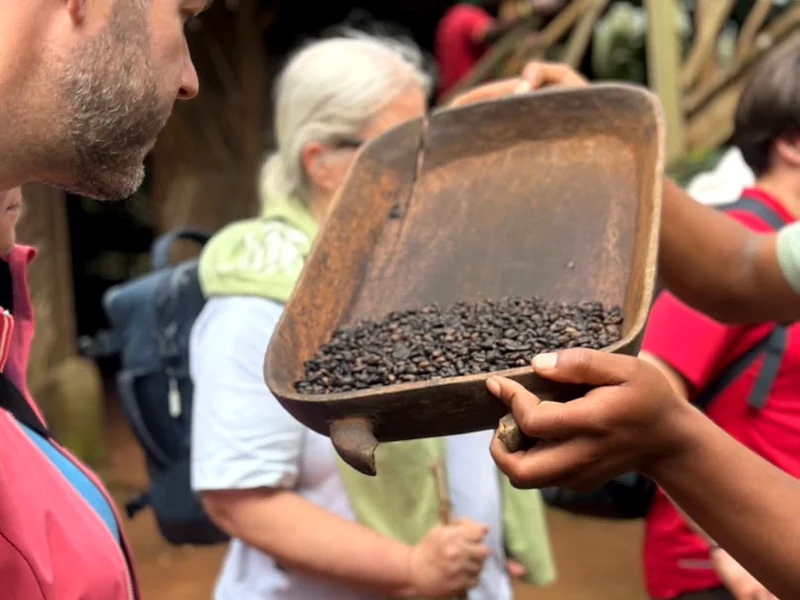
The roasted beans go back in the wooden bowl and we pound them into powder. This is the moment the whole yard starts to smell like coffee.
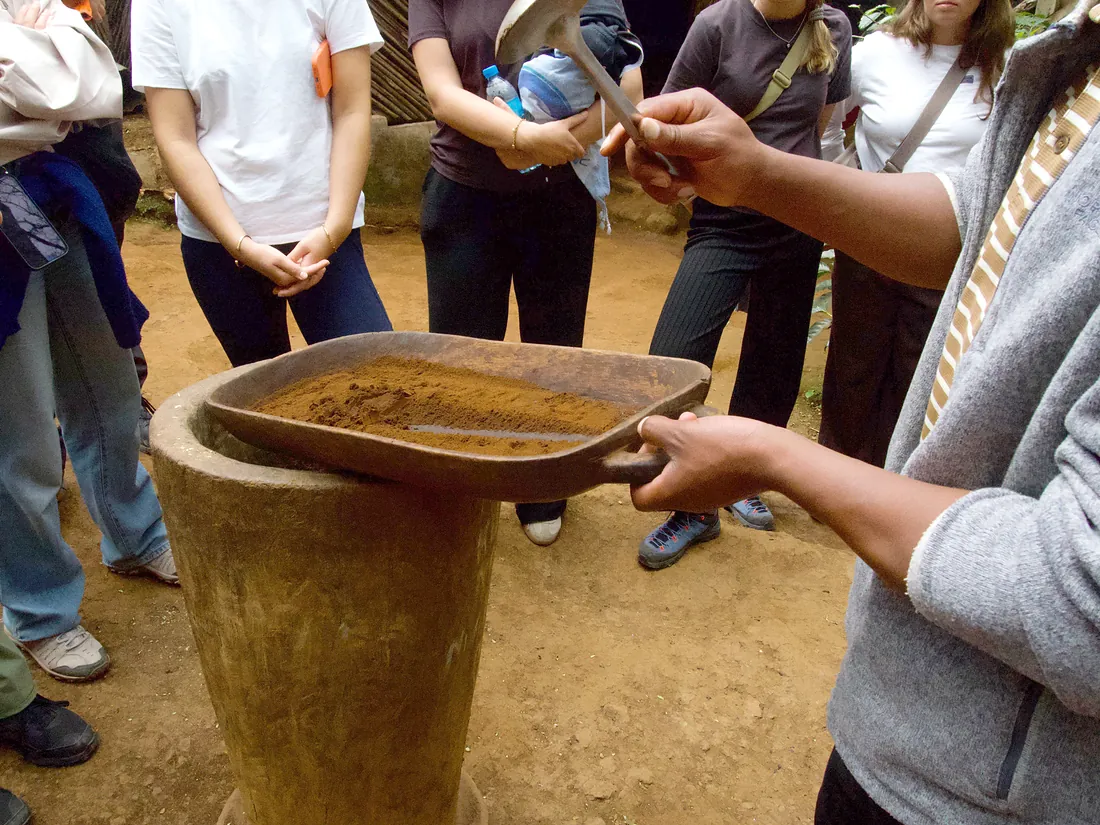
Photograph by @oncamcreations
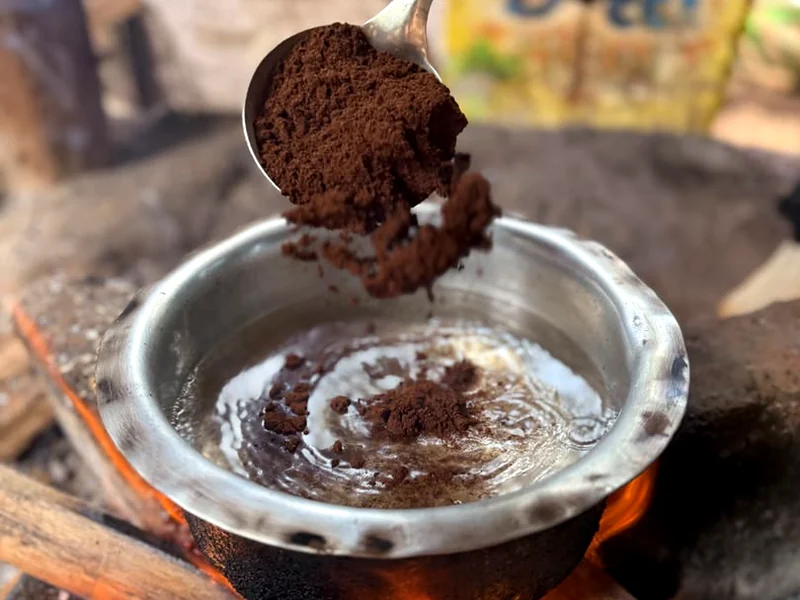
We boil clean mountain water over the fire and stir the fresh powder straight in. A few minutes later you drink coffee from a tree you were standing next to this morning.
No booking form, no deposit page. Send Justin a message, tell him roughly when you are in the region, and he takes care of the rest.
Open every day, 6:00 to 21:00 East Africa Time.
Photograph by @oncamcreations